training like a

like a

like a

like a

sex machine! 1, 2, 3, 4!

The agent-model of community behavior is taking shape and I feel pretty good about the whole thing, still. We have two others interested in adapting the basics for their own work in conflict. It would be great if that could happen– if the model of the obesity epidemic could be the solution for intractable conflicts.

Training is going excellently. I’m passed my old 100% and feeling extreme. I’m surging. I just need to keep it safe.

No conquering strange and hot girls.

For now.

Posted in journal | Comments Off on training like a

Fire Day

Further down the rabbit hole of complexity theory.

Scale and perspective.

We see natural phenomena that strike as us interesting and sophisticated, yet mindless. For instance, we see plants grow in the direction of the sun, some of them even turning towards it and tracking the movement of the sun across the sky. Does the plant “want” sunlight? Its reaction to the sun portrays a relationship between the two. The plant reacts to an outside stimulus. It’s taking in information from its environment– the location of the sun– and reacting to it, by repositioning itself to get the most benefits from the rays. This is plant mind, right? What is that?

We can say it’s cause and effect. The phenomenon is called phototropism. It’s quite simple– plant cells on the darker side of the stalk grow faster than on the lighter side and it tilts the whole plant in the opposite direction, in this case the direction of the sun. So is the plant doing anything? Those reactive cells are determining, as a collective, the “behavior” of the plant, in response to information coming from its environment (in this case photons), but he plant, as an entity on its own, isn’t determining any of that. It is that.  This is the key point.

We still say the plant has no mind, and that it merely reacts. Similarly we see in the ant colony a mindless reaction that at first look would appear to be incredibly sophisticated: how does an entire colony self-organize, creating and administering different roles and positions and employing actual techniques for colonization and food aquisition and storage? How does that all occur without a brain figuring it all out?

The colony as a “thing” is existing reactively, and much like the plant, is really an entity of entities. Like the cells determining growth direction in the stalk, the individual ants of the colony determine the direction of the trail.

So fuck, keep going little monkeys.

At the scale of the tiny, the sub-atomic, particles are self organizing by matter of their physical properties. Atoms might bond in covalence because of a shared electron, and as now as a molecule they then might then bond or bind with other molecules for the same reasons (of valence). Molecules bind and combine and eventually, with the right combinations, form the simple proteins that eventually combine and become cells. The cell is an entity– but, like all entities, it’s an entity of entities, in this case molecules interacting. Zoom out again, and the ant itself is merely a collection of such cells– the colony is a collection of entities which are in turn individual collections of entities, and this keeps going, down into particles, and up into the universe.

This is all very important. We’ve chosen to define life in a particular way, and that definition might be inhibiting our ability to see a greater reality at play across the universe. At the level of the atoms, we see a true and clear mechanism of behavior. Same at the cellular level. The leap here is that the same applies to the ants as they march in their line. And the same for birds as they flock together. These complex systems are controlled by clearly identifiable properties, and chiefly among them is the negative feedback loop, something regulating behavior to keep it in a zone required for its survival, and that “desire” for survival is the same “desire” within the mind of a plant growing towards the sun. That is, it’s not generating the desire, it’s made of entities obeying basic rules. If members of the flock stray too far, the flock diminishes and the species has a lower chance of survival. If they fly too close, they lose the ability to fly at all and they reach a similar fate. If members of the ant colony go too far away from the line, they’re doomed, and if all members did that, the entire colony would die quickly. But if no members strayed from the line, then they’d never find new food sources and they’d be similarly doomed. The negative feedback loop is like a thermostat. When things get too extreme in one direction, it clicks on and brings things back down. When things get extreme going the other way, it clicks off and things head back in the other direction.

Human behavior is similar. Look at the organization of small human communities, maybe at the household level, then at the village level, the city and eventually the mega-city levels. Those systems are not the same– a family is not a neighborhood is not a city. But the collection of households within a city– families within a giant apartment complex, for example, the are the city. How does one become the other? Scale. Zoom down into the city and you’ll see distinct parts that comprise its existence. Zoom down into those parts and other systems are revealed. Continue zooming in and you’ll get to the complex system of cells operating within a single person. Only 20% of the cells within what we call a person are human at all. It’s an entirely different complex system– a city within, made up of thousands of inhabitants– with behaviors and properties and “desires” and patterns… and on the zoom out, that entire world comprises one single person. Continue down to the city within a cell, and the city within a molecule. There are universes everywhere, and nothing is outside of it.

It is one complex system. It is one mind. Mind doesn’t evolve from the complexity, from the star stuff through evolution. Mind is the complexity. Consciousness doesn’t arise from the building blocks of this questionable thing called life, consciousness is the complex system in which all of everything exists. Our evolved brains are merely transducers, temporarily sensing the system– the consciousness,  within which everything exists.
 

Posted in journal | Comments Off on Fire Day

Starless

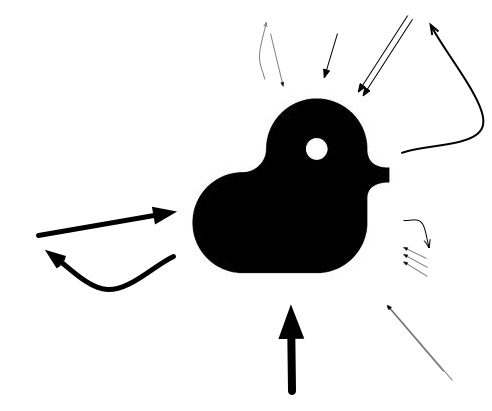
Finally a long held question is answered: are there any planets that are not in orbit around a star, like, free floating through the galaxy, maybe even between galaxies, unattached? You know, the Obsidian Duck of planets?

Indeed, there is at least one: CFBDSIR2149, drifting aimlessly through space, alone. I like it no matter what.

A few things need to be in place for a planet to roam free. It has to do either with how it was made, or how close it comes to other steller masses. Massive objects disrupt each others orbits (and orbitals) when they cross paths, and that can lead to the breakaway.

It would be so interesting to live on a starless planet. Sad because there’d be no sun to wake you up and make you feel good. But cool because you’d be traveling through open space– your night sky (which is your permanent sky) would always be changing, slightly, as you traveled. Your constellations would eventually change as your perspective changes.

You’d think a lonely planet would be hyper cold, with no sun. But CFBDSIR2149 is actually 400°C because of the active gases trapped there. So that’s neat– a sunless planet can be plenty warm. It makes me imagine a planet lit entirely by artificial means– perhaps giant lamps hung by balloon clusters? Also, how would you set your days? There is no “day” on a sunless planet. Or years. All these neat things.

Busy evening and onto a busy weekend. Checking out a cool gallery opening tomorrow night and then dissertation mode all weekend long. Whew.

Later.


Posted in journal | Comments Off on Starless

Shifts Under Food

Given some significant departures at work, things are shifting around and I’m involved in many of them. My daily schedule might be different than it has been, with some more responsibilities and things to run. It’s fine.

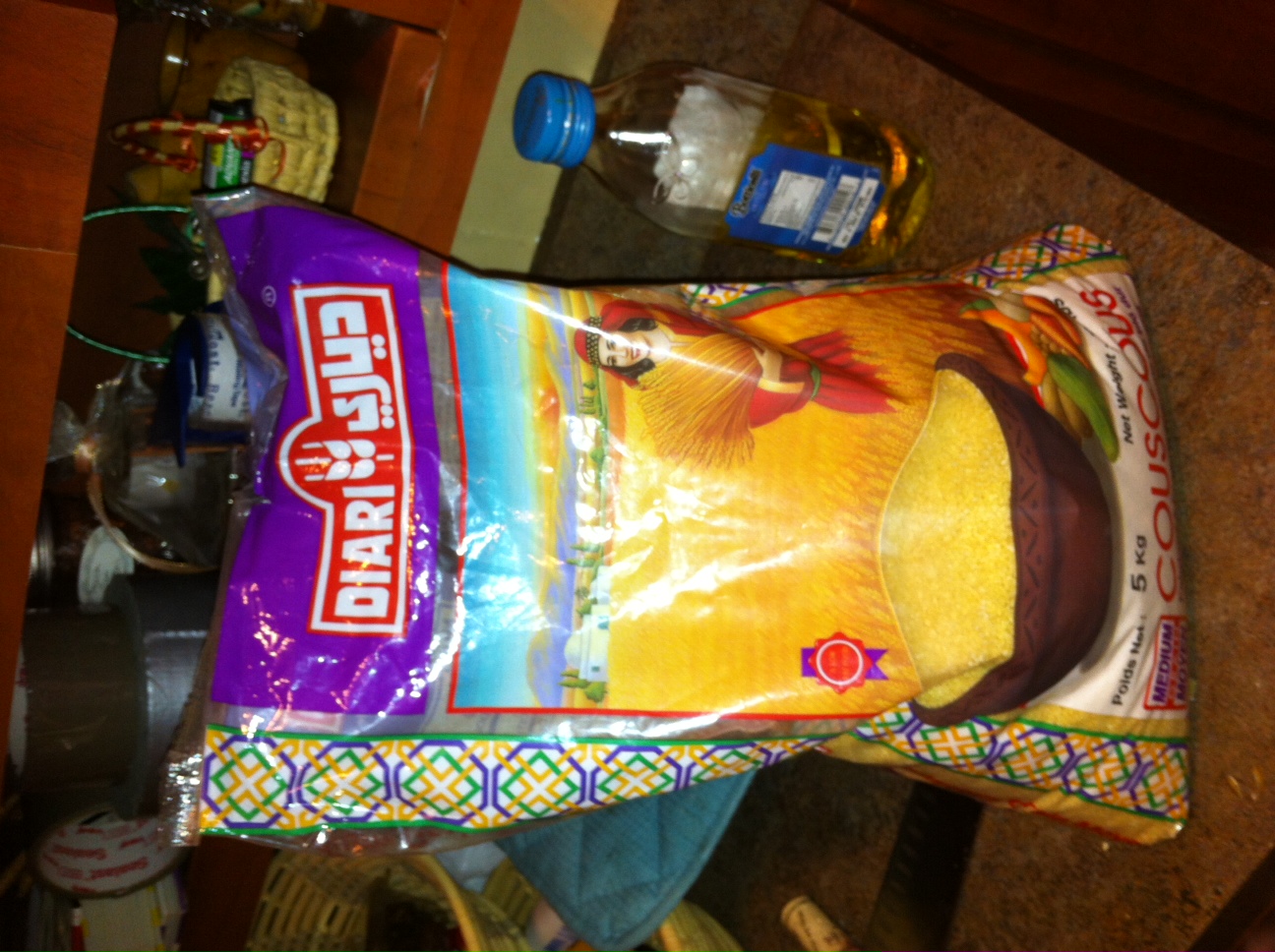
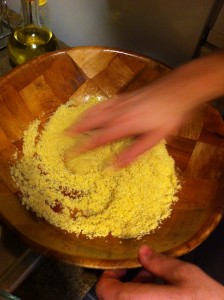
On Sunday I went up to visit a good friend in Yonkers and had a great time. He lived in Tunisa for about 4 years after college and on this trip he showed me how to cook Tunisian food. And I learned how to play with 4 year old crazy children.


Busy day. I say that every post. I wish I didn’t have to, but it’s just the way things are right now. I don’t have as much thinking time during the work day as I used to. Meetings are scheduled for me and some days I come in with only a vague sense of what the day will be like, and discover that I’m booked for huge chunks of time– sometimes the whole morning (which is when I can’t post properly), and sometimes most of the a afternoon. It hasn’t been good for training, but I’m making it work.

Hump day again.


Posted in journal | Comments Off on Shifts Under Food

whew

Hi all, sorry for the late and inconsistent updates. It’s been a race-around week.

To ponder: randomness in a system is necessary for its survival. Take a trail of ants following each other to a food source. Though the trail is necessary and ensures the survival of the colony but keeping everyone together and ensuring their arrival at the food source and return trip to the colony, if you look closely at it, you’ll see about 3-5% of the ants are off the trail, randomly wondering this way and that way, seemingly off target, on their own. They’ll go off in their own direction, sometimes never finding food and dying. But they can’t help themselves. They’re the source of the randomness in the “system” of the colony that keeps it going, and they don’t really have a choice. In the event that the food source at the end of the trail turns out to be bad, or depleted, the whole colony is doomed unless able to quickly establish a link with a new sources. That new link is only possible to the extent that it has random members going off trail, doing their own thing. When they find food, they become the head of the new trail.

Randomness is a critical aspect of any complex system. From the quantum foam of particles popping in and out of existence at subatomic levels, to the creation of stem cells in the human liver, it’s the randomness that ensures survival. It’s how we’ve evolved as a species, and indeed how every form of life has ever evolved: survival of the random members, the different members, when the entire environment changes, or when the disease breaks out, or when the hive mind leads everyone to destruction, it’s the randomly different who survive, and whose reproduction leads to survival for the species.

Randomness in a complex system is everything. Otherwise, there’s no complexity. I see that now.

Posted in journal | Comments Off on whew

Teryx.

teryx.


teryx.


Last night I spoke at a conference on sustainable peace. Small turnout, but we had a nice conversation about pedagogy in emerging fields that suffer from the theory-to-practice gap. Key point about that gap– researchers find complexity very uncomfortable and usually avoid it, focusing more on subjects and problems where there is lots of data. Practitioners love complexity and are comfortable with it and are used to not having lots of data, especially of the data needed to best solve complex problems. And that is the nature of the gap: scholars cluster at high information/ low complexity, and practitioners at hi complexity/ low information, and how to do you connect the two, how do you create someone who’s comfortable in both settings?

Tonight after training at the MMA gym I’m going to eat a steak and then listen to podcasts on secular humanism while I write my dissertation until I fall asleep. I wish it were snowing still– writing with flurries outside and cup of hot tea is one of the best times possible, I’m pretty sure.

On the morrow.

Posted in journal | Comments Off on

whew

As a hater of politics and both parties supposedly running our country, I hate psychopathic religious nutjobs who think they have divine mandates more, and I’m happy that the party increasingly under the influence of such groups has handedly lost.

Our country is split into conservative and liberal states and regions  in almost the exact same places as the country was split into north and south during the civil war. What does that mean, do you think?

When ideology or dogma trump reason, everything fails. We need to keep pressing for reason– evidence-based reason– in all levels of governance in this country.

I’m happy Romney lost. I’m terrified he came so close.

Please come over, Nor’easter. I have hotpot materials and books. We can spend time together.

Speaking at a conference tonight for an hour. I need to review a bit for that, and that’s most of my day, as the snow begins to fall.

Hump.


Posted in journal | Comments Off on whew

Updater

Sorry for the missing days, time was very short.

Because of the power outages around town last week I invited some coworkers to crash at my place so the apartment was very full. Two in Hollow Way Studio, one in the semi-spare bedroom, one in the living room on the couch. We had a couple big dinners, including hot pot, and my living room has the lingering spicy scent to remind me. It was a nice way to pass the hurricane days, though with each day my desire to get some alone time grew tremendously. As power flickered back to life, people returned to their apartments, and I found myself again in a quiet home with much to think about.

I have a gargantuan task ahead of me as I work through this dissertation. That my organization might be in peril is making things somewhat stressful just about all the time. There’s been some major leadership changes way up in my department and I think they might try some radical things with my group– possibly combining it with other groups, possibly dismantling it. For my organization, it’s been about 14 years of autonomy during one of the greatest transformations in human communication. Over that time, we went through two significant leadership changes within the larger organization that houses ours, and due to the vision and leadership of one man, we had strong advocates everywhere, all up and down the chain. But that might have changed now, and because that guy is absent most of the time as he tries to hang on over brutal cancer, we don’t have his clout nor his influence over the larger machine we live and work within. We are less able to continually present the reasons for our funding, our mission, and our existence as an organization.

How lucky we have been to have been working at the time were, when one of the greatest transformations in human history was taking place– when information was instantly accessibly and the question became what to do with it, and how to use it, rather than how to get it.

The uncertainty here has created a tricky situation for me. I have had other opportunities come up as I’ve been working and living here, and I took on a few different external projects that I’m very proud of. But I always kept attached to this place because of the organization itself, and what we have been trying to do. Now that the major change might be on the way, I need to protect myself a bit and make sure I have the next thing lined up. I’m not certain what it will be.

In the short duration of one’s “prime years”, one can choose to either make a career out of a trade or skill or occupation, or to keep taking risks and entering other spaces surrounded by the experts there. These days I feel more excited about doing something completely new than trying to recreate what I had here. I’m not sure what kind of resume I’ll be able to throw together for the different opportunities I’ll be looking for.

The mild anxiety around this upcoming change comes in waves. Sometimes when I lay in bed it washes through me and is difficult to shake off. The uncertainty makes concentrating on other things difficult. Other times I’m able to snap to a perspective that seems healthier– the perspective of tiny life in a giant universe, where, in the scheme of things, nothing matters as much as it feels it does. In that perspective, the only things that matter is outside of you– perhaps the people you affected in some way.

I’d become a monk if I wasn’t so much of a caveman. But I am.

Happy Monday.

Posted in journal | Comments Off on Updater